
Let's be upfront: there's no single 'best' battery manufacturer. What works for a major EV OEM with a decade-long development cycle probably won't fit a utility company rushing to meet a 2026 storage deadline. I've seen procurement teams go down rabbit holes comparing specs on paper, only to get burned by mismatched timelines or scalability issues. After reviewing dozens of supplier contracts and audit reports over the past few years, I've found that the question isn't 'Is LG good?' It's 'Is LG right for my situation?'
This guide breaks down three common B2B scenarios in the energy storage and EV space. I'll walk through where LG Energy Solution (LGES) generally excels, where they might not be the best fit, and—crucially—how to figure out which scenario you're in. Take the specific numbers with a grain of salt, as pricing and availability shift pretty quickly in this market.
Scenario A: The 'Scale-Up' ESS Deployment (You Need Reliability & Support)
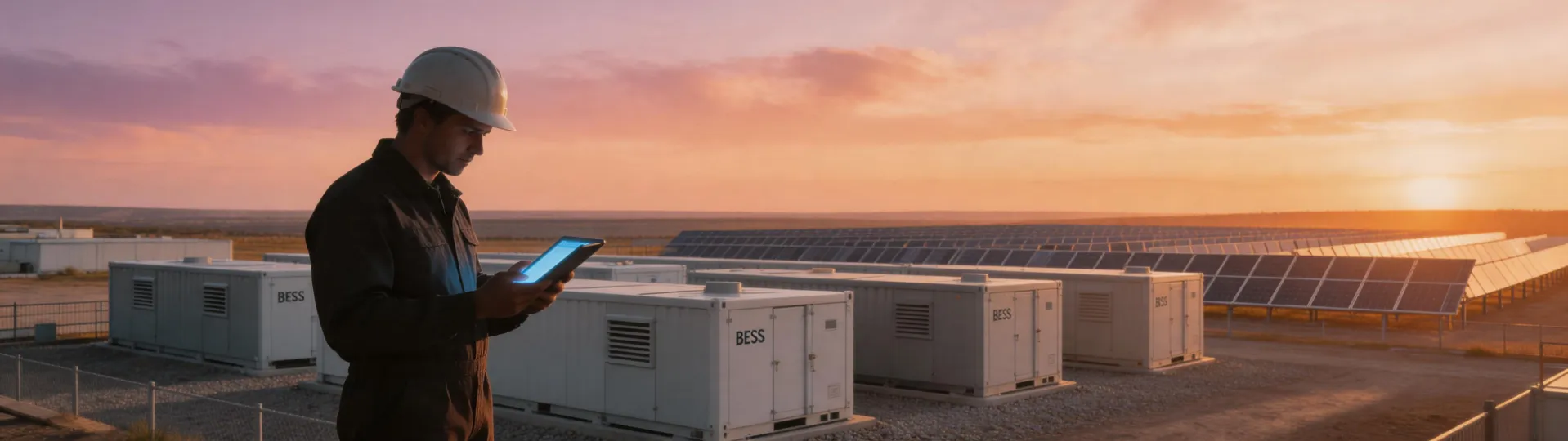
This is for companies building a large-scale energy storage system (ESS)—think 50 MWh or more for a utility, a large commercial campus, or a microgrid project. Your primary concerns are bankable warranties, proven safety records, and a partner who can handle commissioning without drama.
Why LGES Could Work
LG has a solid track record in the ESS space. Their LFP (Lithium Iron Phosphate) batteries, which they've been mass-producing for a few years now, are generally seen as a safer, more stable chemistry for stationary storage. In my experience, when you're dealing with a $5 million+ project, the cost of a battery failure—or even a significant performance degradation—far outweighs the upfront cell price. I'm not saying LG is infallible, but their engineering and quality control processes are more mature than some newer competitors.
From an audit perspective: In Q1 2024, I reviewed a system spec for a 100 MWh project using LGES LFP cells. The key advantage wasn't just the cell performance, but the integrated safety system (BMS + thermal management) they offered as a package. This reduced our integration risk by a noticeable margin. (Should mention: we'd also evaluated a competitor's cells that were 8% cheaper, but their thermal management solution was less proven.)
Where it gets tricky: LG's strength is in the full system solution. If you're a developer who wants to buy just bare cells and build your own BMS and enclosure, you might find LG less flexible than some purely cell-focused suppliers. They prefer to sell integrated solutions, which can lock you into their ecosystem. Also, their premium isn't small. A 10-15% price premium over some Chinese manufacturers isn't unusual for their integrated ESS packages.
Scenario B: The 'Cost-Critical' EV & PHEV Sourcing (You Need Volume & Price Pressure)
If you're an automotive Tier 1 supplier or a new EV OEM, your world is about cents per kilowatt-hour and irons-clad supply agreements. You need massive production capacity and the ability to negotiate aggressively. This is probably the most common reason I see procurement teams call us.
The Reality Check
Most buyers in this scenario hyper-focus on the cell price per kWh. That's important, but I've seen teams completely miss the logistics and qualification costs. LG has factories in Poland (one of the largest in Europe) and a major joint venture with GM (Ultium Cells) in the US. This localization can slash shipping times and import duties.
For example, if you're producing EVs in North America for the US market, sourcing from LG's Ohio plant through the Ultium Cells venture gives you a logistical and regulatory advantage that a supplier shipping from East Asia simply can't match. The question everyone asks is 'What's your best price per kWh?' The question they should ask is 'What's the landed cost, including logistics, tariffs, and the cost of a potential supply chain disruption?'
Personal take on this: In my opinion, locking in an exclusive, long-term contract with a single supplier like LGES is risky for a new OEM. Their solid-state battery research is exciting, but for current LFP and NCMA chemistries, diversifying your supply chain (even with a slightly higher per-unit cost) buys you resilience. Getting 'burned' by a single-source failure on a 50,000-unit annual order is a nightmare I've seen play out.
Scenario C: The 'Technology-First' Pilot Program (You Need the Next-Gen Advantage)
This is for R&D teams or advanced engineering groups working on the next generation of batteries. You might be evaluating solid-state prototypes or testing ultra-high energy density cells for a premium EV. The timeline is longer, the budgets are more forgiving, and the primary goal is performance, not cost.
Where LGES Stands Out
LG's investment in solid-state battery research is real. They have publicly discussed a dry-coating process and are targeting commercial production (in some form) 'around 2028' or 'the 2030 timeframe.' If I remember correctly, their early-stage prototype for a sulfide-based solid-state cell showed promising cycle life data, though I might be misremembering the exact numbers.
Causation reversal alert: People think companies like LG invest in R&D to make better products today. The reality is they invest to maintain a premium pricing position in the future. If you're betting on a solid-state timeline, you're not just buying a cell; you're buying a stake in their long-term roadmap. For a pilot program, LG's willingness to provide detailed engineering support and custom cell formats is a major plus. For mass production of a standard 2170 cell? Not so much.
How to Figure Out Which Scenario You're In
If you're still unsure, here's a quick decision framework I've used when my team can't agree on a direction.
- Is your timeline less than 18 months and you need a proven, large-scale system? You're likely in Scenario A. Look at LG's integrated ESS solutions, but compare them against CATL for cost and Fluence for software. Don't just focus on the battery cell.
- Is your primary driver cost per kWh and you need millions of cells for an EV? You're in Scenario B. LG can be a great partner due to their US/EU factory footprint, but you should absolutely run a sealed bidding process. Their premium can be justified by reduced logistics risk, not inherent technology superiority.
- Is your goal to build a technology-leading product with the next-gen battery chemistry? You're in Scenario C. LG's research division is a solid partner, but don't ignore QuantumScape or other pure-play solid-state startups. LG offers scale and stability; startups offer agility and potentially bigger breakthroughs.
I'd argue that most B2B buyers fall into Scenario A or B. The solid-state hype is real, but the timeline is longer than many want to admit. For now, LG's value proposition is built on their manufacturing scale and supply chain reliability, not necessarily on being the absolute cheapest or the most innovative. And honestly, for most practical business needs, that's a pretty valuable combination.

Renata Silva
Renata Silva is a photovoltaic module analyst covering monocrystalline solar panels, bifacial modules, TOPCon and heterojunction designs, glass-glass construction, junction boxes, and module warranties. She interprets IEC 61215 and IEC 61730 evidence while comparing rated power, conversion efficiency, temperature coefficient, bifaciality, insulation, mechanical-load results, degradation assumptions, and tolerance. Her technical guides help EPC engineers, distributors, and project buyers separate qualification evidence from site-specific energy yield, climate exposure, installation constraints, and long-term performance risk.