
-
Start With Your Scenario, Not the Brand
-
First, What Are You Actually Buying?
- Scenario A: Portable Backup Power (Solar Generator)
-
Scenario B: Permanent Off-Grid Power (DIY Off-Grid Solar System)
-
Scenario C: Buying at Scale (EV, Utility, BESS)
-
What LG Energy Solution Battery Technology Changes (and What It Doesn't)
-
The Three Questions That Tell You Which Scenario You're In
-
The TCO Formula I Use Before Buying Anything
Can a solar generator power a refrigerator? I've answered that question four different ways in the last three months, and “yes” was only one of them. That's because the right answer isn't about the refrigerator. It's about everything around it: how many hours you need backup, whether you're renting, what your inverter can handle at startup, and what happens on day three with no sun.
I'm a procurement manager at a 280-person manufacturing company. I've managed our energy storage budget—about $240,000 annually—for six years, negotiated with 22 vendors, and documented every order in our cost tracking system. I also built an off-grid test setup in my shed because I refuse to recommend a purchase I haven't tracked in a spreadsheet.
If you're hoping for one perfect answer, stop reading. There isn't one. There's a scenario-matching exercise, and I'll walk you through it.
Start With Your Scenario, Not the Brand
The brand question—should it be LG Energy Solution or someone else—matters, but only after you've answered a simpler one: What are you actually powering, and for how long?
I learned this the hard way. In Q2 2024, when we switched one of our facilities from a rental generator to a fixed battery system, I almost bought the cheapest option because the per-kilowatt-hour cost looked unbeatable. That “free setup” offer actually cost us $450 more in hidden fees once I added permits, disconnects, and a revised electrical plan. Since then, every proposal goes through the same TCO spreadsheet.
First, What Are You Actually Buying?
A solar generator is a battery cabinet with an inverter, charge controller, and solar input built in. You plug in a panel, charge it, and carry it to wherever the outage is. A DIY off grid solar system is more like a permanent power plant: separate solar array, charge controller, inverter, and a battery bank—often a home battery like the LG Energy Solution RESU or a larger ESS cabinet.
LG Energy Solution battery technology isn't one thing. It spans NMC and LFP chemistries. NMC packs more energy into less space; LFP gives you more cycles per dollar. Solid-state battery research is real, but it's not sitting on a shelf at your local distributor. In 2025, you're buying lithium-ion.
Scenario A: Portable Backup Power (Solar Generator)
Use this when you need power in a rental, a cabin, a van, or a spot that has no permanent wiring. You want something that ships in a box, charges from solar panels, and doesn't require an electrician. To be fair, a solar generator is simpler. No permits, no wall mounting. That simplicity has value. But don't confuse simple with expandable.
Can a Solar Generator Power a Refrigerator?
Yes—under conditions. From the wattage meters I've used, a typical residential fridge's running draw is often in the 100 to 300 watt range, but the compressor surge can hit several times that for a fraction of a second. If the generator's inverter can't handle the surge, the fridge won't start. It's that simple.
I knew I should put a Kill A Watt meter on my workshop fridge before buying a generator, but I thought “what are the odds?” The odds caught up with me when the compressor tried to start and the overload light came on. That was a $600 fridge that wouldn't run. The fix wasn't a bigger generator—it was an $85 soft-start kit. The lesson: measure, don't assume.
If you're buying a solar generator online, don't ignore delivery logistics. USPS stops at 70 pounds (usps.com), so any realistic backup battery is going freight. A quote for a 48-pound unit to a remote site came back with a $310 trucking fee. That was after the “free shipping” threshold. Hidden costs, again.
For a weekend outage, a 1 to 2 kWh solar generator with a surge rating above the fridge's startup load is usually enough. For a permanent off-grid cabin, it's not. You're recharging from solar, and one cloudy day can wipe out your margin.
Scenario B: Permanent Off-Grid Power (DIY Off-Grid Solar System)
Use this when you need daily cycling, not emergency backup. A fixed ESS like the LG Energy Solution RESU is mounted on a wall, wired to your loads, and designed for thousands of cycles. It's a different asset class.
I went back and forth between a 10 kWh solar generator and a fixed LG Energy Solution system for two weeks. The generator offered portability. The fixed system offered expandability, a 10-year warranty, and a battery management system designed for daily use. Ultimately I chose the fixed system because I was running a workshop, not a camping trip. But if I were renting my shop, I'd have bought the generator. Different scenario, different answer.
The counterintuitive part: for daily cycling, a fixed system can have a lower TCO than a solar generator, even if the sticker price is higher. The generator's integrated battery is harder to expand and replace. When it degrades, you might be buying a whole new unit. With a modular ESS, you replace one stack and keep going.
For a DIY off grid solar system, choose LFP chemistry if you have room. It's heavier and less energy-dense than NMC, but it lasts longer in a stationary application. LG Energy Solution's ESS lineup has shifted toward LFP for that reason. If you're maximizing energy in a tiny enclosure, NMC still makes sense. But I'm not paying a compactness premium for the wall of a barn.
Before you go full DIY, understand what “DIY” means here. Wiring panels and mounting a battery is one thing. Connecting to the grid—if you're tying into it—is another. Most utilities require a licensed electrician. Skipping that step because it “never matters” is exactly how you end up with an inspection failure. Looking back, I should have paid for the permit review upfront on my first off-grid project. At the time, the $220 fee felt unnecessary. It wasn't.
Scenario C: Buying at Scale (EV, Utility, BESS)
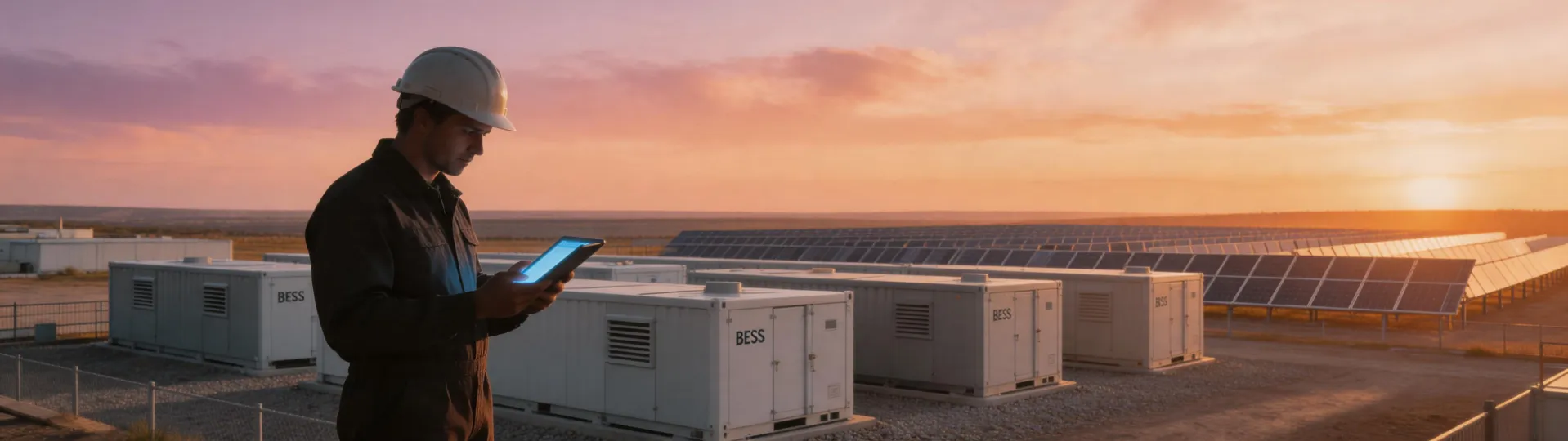
If you're an automotive OEM, a utility, or a commercial storage developer, you're not choosing between a solar generator and a home battery. You're signing volume agreements for battery cells. That's where the GM LG Energy Solution battery partnership comes in.
The GM LG Energy Solution battery supply deal—via the Ultium Cells joint venture—is more than an EV story. It's a signal that LG Energy Solution can ramp gigawatt-scale manufacturing in North America. When I'm evaluating a battery supplier for a BESS project, I ask about factory capacity, cell uniformity, and vertical integration. Ultium Cells plants in Ohio, Tennessee, and Michigan give LG Energy Solution a domestic production footprint. That matters for tariffs, logistics, and warranty risk.
If you're scanning battery energy storage BESS news, the trend is not a secret new chemistry. It's manufacturing scale. LG Energy Solution's own announcements have highlighted a move to convert some Poland production to LFP ESS cells. That is a bigger signal than any press release. It tells me they see stationary storage demand growing enough to sacrifice EV line capacity. For a procurement guy, that's the kind of commitment I want from a supplier.
But here's the honest limitation: if you only need 5 kWh for a few nights a year, none of this matters. A solar generator is the right tool. Don't call a BESS vendor for a fridge. I get why people overbuild—bigger feels safer—but bigger also costs more, takes more space, and needs more maintenance.
What LG Energy Solution Battery Technology Changes (and What It Doesn't)
LG Energy Solution battery technology changes your operating cost, not your basic decision. The chemistry determines cycle life, degradation, and usable capacity. Good battery management matters more than the badge. That said, buying from a company that's likely to exist in year 10 has real value. After comparing eight cell suppliers over three months for a commercial project, the safest choice wasn't the cheapest. It was the one with the strongest balance sheet and the clearest warranty roadmap.
One warning: if a battery vendor says “green” or “recyclable” without specifics, I discount it. Per FTC Green Guides (16 CFR Part 260, ftc.gov), environmental claims have to be substantiated. If they can't point to a take-back program or third-party certification, that claim is marketing, not a specification.
The Three Questions That Tell You Which Scenario You're In
Stop guessing. Answer these three questions:
- Does the power need to move? If yes, buy a solar generator. If no, keep going.
- Will this system cycle multiple times a week? If yes, choose a fixed ESS. If no, a solar generator is enough.
- Would a failure cost more than $5,000? If yes, buy from an established manufacturer with a service network. LG Energy Solution fits that category. If no, the risk is yours to manage.
If you answered “move” on the first question, a fixed ESS is a waste of money. If you answered “daily cycling” on the second, a solar generator will disappoint you. Period.
The TCO Formula I Use Before Buying Anything
I built this formula after getting burned on hidden fees twice. It looks simple, but the details are where decisions get made:
(Purchase + installation + permits + maintenance + energy losses) ÷ expected lifetime usable kWh = your real cost per kWh.
Unit price is what you show your manager. That number is what you keep at night.
In my case, the fixed LG Energy Solution system won because the lifetime math matched the expected load. If your load is a weekend fridge in a rented garage, the math will point somewhere else. That's fine. There is no best battery—only the best battery for your scenario.

Renata Silva
Renata Silva is a photovoltaic module analyst covering monocrystalline solar panels, bifacial modules, TOPCon and heterojunction designs, glass-glass construction, junction boxes, and module warranties. She interprets IEC 61215 and IEC 61730 evidence while comparing rated power, conversion efficiency, temperature coefficient, bifaciality, insulation, mechanical-load results, degradation assumptions, and tolerance. Her technical guides help EPC engineers, distributors, and project buyers separate qualification evidence from site-specific energy yield, climate exposure, installation constraints, and long-term performance risk.