
I'm the office administrator for a 140-person company. I manage all facilities procurement—roughly $120,000 annually across 8 vendors. When our building manager retired in early 2024, "energy stuff" landed on my desk. I didn't know a kilowatt-hour from a kilowatt. I still don't, completely.
What I do know: there's no single answer to "what should we buy?" It depends on what you're actually solving for. I've now been through three different energy purchases. Each one needed a different approach.
Here's how I'd break it down.
Start by asking what problem you're actually solving
Most buyers I've talked to make the same mistake I did at first: they start with products instead of problems. The question isn't "should we get EV chargers?" It's "do we have vehicles that need charging, and who's responsible for them?"
I've dealt with three situations that look similar on the surface. They're not:
- Scenario A: You need to charge a handful of vehicles (company cars, employee EVs) at your location.
- Scenario B: You need backup power for your office or facility.
- Scenario C: You're evaluating battery technology for a larger operation or fleet.
Each one has a different decision logic. These different logics—that's the part nobody warns you about.
Scenario A: You need EV charging for a few vehicles
This was my first project. We have three company cars and about a dozen employees who drive EVs to work. We needed a home EV charger station setup—except at the office.
Here's what I got wrong initially: I treated it like buying a fridge. Look at specs, pick one, done. Actually, there are three things that matter more than the charger itself.
First, the amperage available. Our building's electrical panel had capacity for two Level 2 chargers, not the six I'd envisioned. We had to add a sub-panel. That cost $3,200 installed—more than the chargers themselves.
Second, vehicle compatibility. Not every charger plays nice with every car's onboard charging system. We have a Volvo EX30 in the pool car rotation—I later found out that the Volvo EX30 battery supplier CATL LFP cells are pretty standard for AC charging, but the handshake protocols still vary by charger brand. We tested three models before finding one that didn't throw error codes on the Volvo.
Third, who's actually paying for the electricity. Sounds trivial. It's not. We ended up installing a networked charger with RFID cards so we could track employee usage separately from company vehicles. That added about $400 per unit.
We didn't have a formal verification process for charger compatibility. Cost us when our first choice kept dropping the connection to the Volvo mid-charge. We returned two units and ate $380 in restocking fees.
The lesson: if you're charging a mix of vehicles, test before you buy in bulk. Most charger vendors will send a demo unit for a week. Take them up on it.
Scenario B: You need backup power for the office
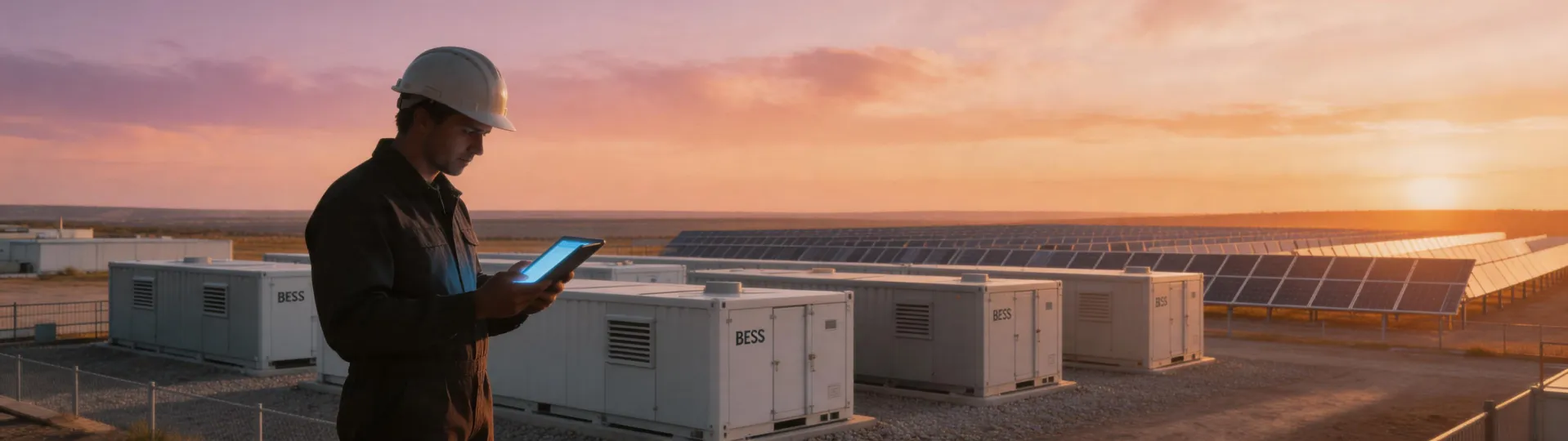
A year later, we had a three-day power outage that shut down our server room. The UPS kept things running for 45 minutes. Forty-five minutes. After that, we were dark.
So I started looking at backup options. Two paths emerged: a portable solar generator setup (like an Inergy solar generator) for temporary or supplementary power, or a permanent solar-plus-storage system.
These serve completely different needs. Confusing them is expensive.
The Inergy path (or similar portable units): We looked at the Inergy Apex and Kodiak models. They're essentially large batteries with solar inputs. For us, a single Kodiak unit (roughly 1.5 kWh) could run our server rack for about 2 hours. Not enough for an extended outage, but enough to bridge a gap or power critical systems during a planned shutdown.
Cost: $1,500-$3,500 per unit depending on capacity. No installation required, no permits. You plug it in, charge it from the wall (or solar panels), and it sits there until you need it.
The permanent solar path: This is where people get sticker shock. I asked our electrical contractor how much a 10kW solar system would cost. Here's what he gave me:
"As of Q1 2025, a 10kW solar system typically runs $18,000-$32,000 installed before federal incentives, depending on your location, roof type, and whether you need battery storage. With battery backup, add $8,000-$15,000. The 30% federal tax credit helps—but it only applies if you own the system, not if you lease."
That's a real number. I've seen "how much does a 10kW solar system cost" searches lead people to $10,000 flat figures that ignore battery costs, permitting, and installation. The battery part is what makes it useful during an outage. Without storage, your solar panels are useless when the grid goes down. That surprised me. How much does a 10kW solar system cost with backup? Closer to $30,000-$45,000.
The causation reversal I didn't expect: People think bigger solar systems automatically mean better backup. Actually, a smaller solar array paired with adequate battery storage often provides better outage protection than a large array with no battery. The grid-tied inverter shuts off during an outage for safety—so all those panels do nothing. The battery is what keeps the lights on. The solar just recharges it.
We ended up with a middle path: a 4kW solar system with a 10 kWh lithium battery backup, tied to critical circuits only (server room, security, one conference room). Total cost after incentives: about $14,000. Would've been cheaper to do the full 10kW, actually—the per-watt cost drops with scale—but we didn't have the roof space.
Scenario C: You're evaluating battery technology for a larger operation
This one's less common for office admins, but I include it because we're considering it for our delivery fleet. And because the search results were confusing.
If you're specifying batteries for vehicles or stationary storage, you'll run into brand names quickly. CATL is the one that comes up most often. They're the world's largest EV battery manufacturer—that's verifiable via their annual reports, not something I'm making up.
The confusing part: different battery chemistries serve different purposes. Two that come up constantly:
LFP (lithium iron phosphate): This is what's in most entry-level EVs now, including the Volvo EX30. It's cheaper, more thermally stable, and lasts more cycles than older NMC chemistry. The tradeoff: slightly lower energy density, so it's heavier per kWh. For fleet vehicles that return to a depot every night, LFP makes sense. For long-haul trucks, it doesn't.
Sodium-ion: CATL announced its new sodium battery in 2021 and began production in 2023. The appeal is material cost and cold-weather performance—sodium is abundant, and these cells retain more capacity in freezing temperatures than LFP. But energy density is lower, so it's better suited for stationary storage (where weight doesn't matter) than vehicles. I've seen marketing suggesting sodium-ion will replace LFP in cars. That's not accurate as of early 2025—at least not for anything with a long daily range.
The thing I'd tell any admin in this situation: don't specify battery chemistry yourself. You'll get it wrong. Tell the vendor your operational requirements—daily mileage, charging window, temperature range, expected service life—and let them match the chemistry. Your job is to ask "what happens if this fails in year 4?" and get an answer in writing.
How to figure out which scenario you're in
After going through all three, here's the simple version:
- If you have 1-10 vehicles that need charging: Scenario A. Focus on electrical capacity and compatibility testing before you buy anything.
- If your concern is keeping operations running during a power outage: Scenario B. Decide between portable (Inergy-style) and permanent (solar + battery). Portable is cheaper and faster; permanent requires a site assessment and permits.
- If you're replacing vehicles or specifying batteries for a fleet: Scenario C. Don't pick the technology. Pick the vendor who can prove their system meets your duty cycle.
And one more thing—this applies to all three:
If you have a deadline, pay for delivery certainty. We had a building inspection in March 2024 that required the EV chargers to be operational. The cheapest installer quoted 8 weeks. The mid-priced one quoted 4 weeks guaranteed, with penalties if they missed it. We went with the mid-priced one.
The cheap installer—I checked back later—was running 11 weeks on similar jobs that month. That's not a knock on them. It's just what "8 weeks estimated" means when the schedule slips: you don't know until it's already late. The certainty cost us about $1,800 extra. Missing the inspection would have cost us a $7,500 reinspection fee plus a delayed occupancy permit for the new wing.
I've stopped pretending the cheapest quote is the cheapest outcome. It's not. Sometimes paying for certainty is the whole point.

Renata Silva
Renata Silva is a photovoltaic module analyst covering monocrystalline solar panels, bifacial modules, TOPCon and heterojunction designs, glass-glass construction, junction boxes, and module warranties. She interprets IEC 61215 and IEC 61730 evidence while comparing rated power, conversion efficiency, temperature coefficient, bifaciality, insulation, mechanical-load results, degradation assumptions, and tolerance. Her technical guides help EPC engineers, distributors, and project buyers separate qualification evidence from site-specific energy yield, climate exposure, installation constraints, and long-term performance risk.