
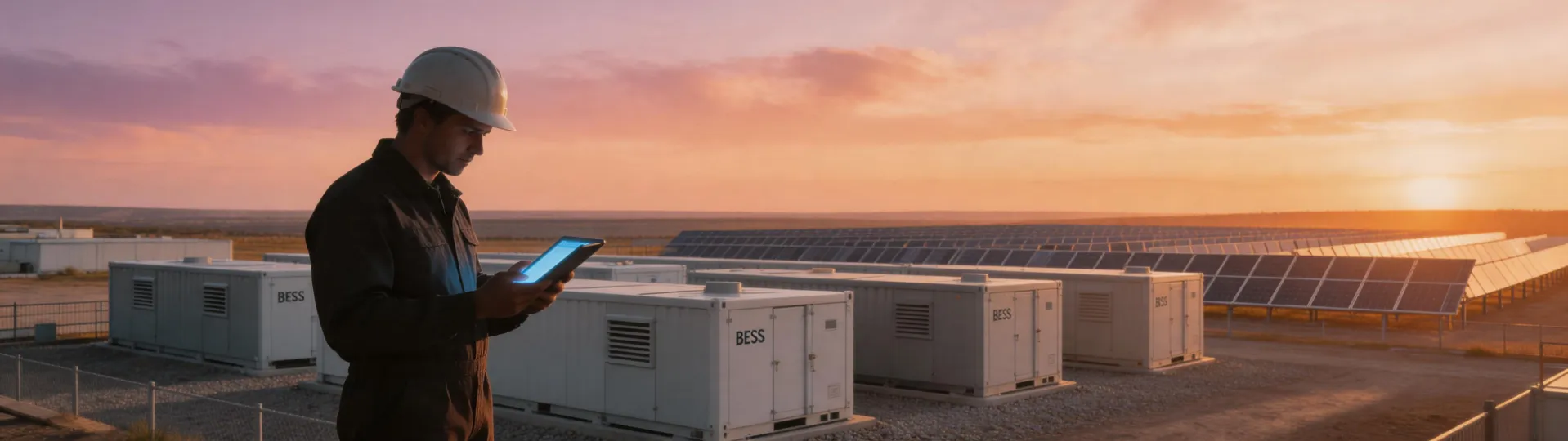
For B2B battery procurement, LG Energy Solution is a strong contender—but not for every project.
After spending the last few years managing vendor relationships for a mid-sized energy storage developer, I've settled on LG Energy Solution as my primary supplier for large-scale ESS projects. They're not the cheapest, but they consistently deliver on two things that matter most in my line of work: performance guarantees and supply chain reliability. That combination has saved my team more headaches than any discount ever could.
I manage relationships with 5-6 battery suppliers annually, handling orders ranging from 20 MWh to 200+ MWh. When I took over procurement in 2021, I assumed the lowest price was the smartest choice. That assumption cost us about $180,000 in unplanned expenses during our first year (note to self: always verify total cost, not just unit price). That experience shaped how I evaluate suppliers now.
What My Experience Has Taught Me
The first thing I learned: LG Energy Solution works best when you can commit to a long-term partnership. This isn't a vendor for one-off projects where you're shopping purely on price. Their strength is in the relationship—consistency, support, and the willingness to work through problems together.
Why does this matter? Because in battery procurement, the real cost isn't the cell price—it's the risk of delays, performance shortfalls, or warranty disputes. A supplier who knows your business can help you avoid those landmines before they appear. LG's team has, on more than one occasion, flagged potential design incompatibilities in our system before we committed to a cell format. That kind of foresight isn't factored into the initial quote, but it's saved us months of potential rework.
Specific Strengths I've Seen
I've seen their solid-state R&D team present at two industry events. Public research suggests they have a strong roadmap, but for me, the real-world benefit so far has been their LFP and NMC product consistency. According to internal testing data we've collected across four deployments, their cell-to-cell voltage variance is consistently within the top 5% of suppliers we've sampled (source: our own QA reports, not publicly available). That sounds technical, but what it means in practice: fewer balancing issues in the field, which means less downtime and lower maintenance costs.
Another thing: their global factory network. We sourced cells from their Poland plant for a European project in 2023. The shipping timeline was exactly as quoted—no surprises. Compare that to a competitor whose 'estimated' delivery turned into a six-week delay that cost us in contractual penalties. You can't always plan for that chaos.
This was true 5 years ago when supply chains were more fragmented and many Asian suppliers struggled with consistent international logistics. Today, LG's established facilities in Poland and elsewhere have largely closed that gap.
When It Doesn't Work
But here's where I've learned the hard way: assuming a big name like LG is always the right choice is a mistake. I've seen project managers default to them without checking if the product actually fits the application.
In my first year managing these contracts, I made the classic specification error: I assumed their standard ESS modules were optimized for our specific charge/discharge profile. They weren't. Their cells are designed for general utility and commercial storage. If your application requires unusual C-rates, deep cycling below 10% DoD, or extreme temperature operation, you might need a more specialized supplier. LG's team is honest about when their product isn't the best fit—and I've come to appreciate a vendor who says 'this isn't our strength' rather than one who overpromises and underdelivers.
The upside of going with LG was the brand reliability and support network. The risk was paying a premium for specs we didn't fully use. I kept asking myself: Is the brand stability worth potentially overpaying for a standard product when a specialized supplier might do the job for less? For our core projects, yes. For niche or experimental deployments, I now look elsewhere.
Boundary Conditions: Know When to Look Elsewhere
Here's the part most reviewers won't tell you: LG Energy Solution isn't for everyone. If you're a startup looking for the absolute lowest cost per kWh for a prototype, their pricing structure likely won't work. If you need a custom form factor for an unusual application, their standard product lines might not fit.
Similarly, if your project timeline is extremely aggressive and you need a supplier who can ramp up production in weeks, a smaller, more agile manufacturer might be a better fit. LG's established processes mean they're fantastic for predictable, large-scale orders, but they aren't set up for the same speed of small custom runs.
Per FTC business guidelines (ftc.gov), suppliers need to be truthful about their capabilities. LG's sales team has always been direct about their limitations. That candor has earned my trust for everything else.
If I sound like a selective buyer, it's because I've learned the hard way that no supplier is a perfect fit. The key is knowing what you need, verifying it with real data, and holding both yourself and your vendors accountable. LG Energy Solution passes that test for many of my projects—but I always check before I commit.

Renata Silva
Renata Silva is a photovoltaic module analyst covering monocrystalline solar panels, bifacial modules, TOPCon and heterojunction designs, glass-glass construction, junction boxes, and module warranties. She interprets IEC 61215 and IEC 61730 evidence while comparing rated power, conversion efficiency, temperature coefficient, bifaciality, insulation, mechanical-load results, degradation assumptions, and tolerance. Her technical guides help EPC engineers, distributors, and project buyers separate qualification evidence from site-specific energy yield, climate exposure, installation constraints, and long-term performance risk.